
Pure, but protected: why we preserve our formulas
Pure, but protected: why we preserve our formulas
Our skincare is designed to hydrate, regenerate and restore skin.
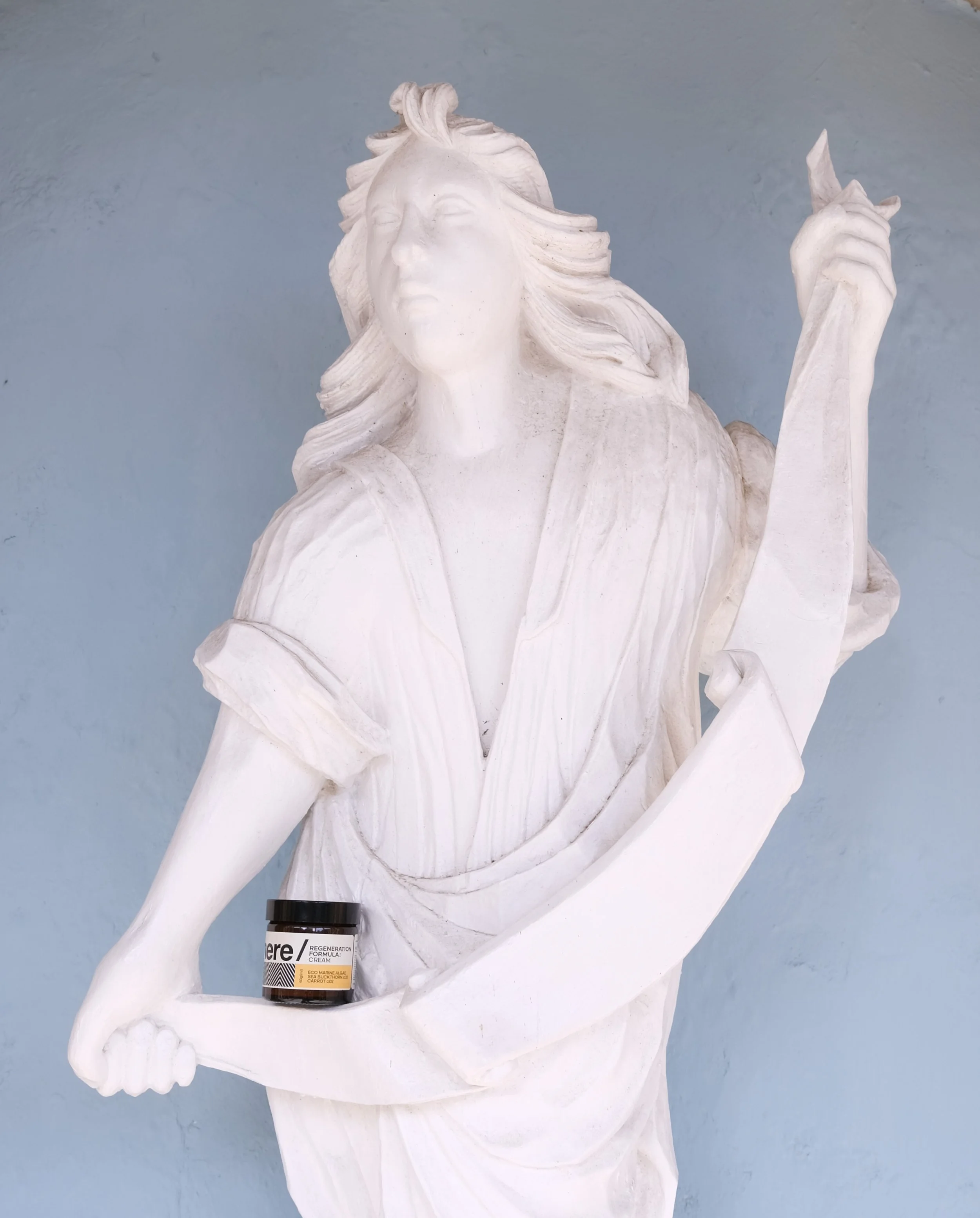
Our brand is built around botanicals chosen for function, refined through years of formulating and real-world use. In our cream, we use eco marine algae for skin support and renewal. Sea buckthorn CO₂ for elasticity, hydration and calm. Carrot CO₂ for dry or mature skin, where comfort and repair matter. Then the base layer: argan, marula, mango butter and ethically sourced sandalwood, bringing softness, structure, and that quiet feeling of nourishment that lasts.
That’s the part you feel.
The part you don’t always see, but that matters just as much, is preservation.
The simple reason: water-based skincare can grow microbes
Any product with a water phase can support microbial growth. That includes bacteria, yeast and mould. Contamination doesn’t always look dramatic, and it doesn’t always smell obvious. Often, it shows up as instability and skin reactions first.
And because skincare is used repeatedly, often with fingers, often stored in warm bathrooms, it needs to stay safe through real use, not just on the day it’s made. So ‘preservative-free’ isn’t automatically cleaner, and it isn’t automatically safer. Sometimes it’s the opposite.
What poor preservation can do on skin
When preservation isn’t effective, a formula can change as it’s exposed to air, fingers, bathroom humidity and temperature swings. The risks are unglamorous, but real:
increased irritation, stinging or redness, especially on sensitised or barrier-impaired skin
flare-ups and breakouts when the product is no longer stable
higher risk around the eye area, where tissue is more vulnerable
Preservation isn’t about making a product last forever. It’s about keeping it safe for the life of the product.
CPSR, and where challenge testing fits
In the UK, a cosmetic product can’t be sold legally without a Cosmetic Product Safety Report (CPSR) signed off by a qualified safety assessor.
For water-containing products, that safety assessment needs evidence that the formula remains microbiologically safe in real use. This is where preservative efficacy testing comes in, commonly called challenge testing. It’s the test that shows whether a formula can resist microbial contamination over time, not just on day one.
In other words: preservation isn’t a marketing choice. It’s part of making a product fit for use.
Why we use Preservative Eco
We use Preservative Eco because it fits the brief we care about: strong protection, compatible with natural formulation, and aligned with our ethics.
It’s a broad-spectrum system designed to protect against bacteria, yeast and mould in water-containing skincare. It also works well across a formulation-friendly pH range, which gives us flexibility while keeping the feel of the formula exactly where we want it: alive, elegant, and stable.
And we choose it with the same lens we use for everything else: no quiet compromises.
Preservation, palm oil, and the ethics of ‘invisible’ ingredients
Palm oil doesn’t only show up as ‘palm oil’ in skincare. It often arrives through the functional, behind-the-scenes parts of a formula: the emulsifiers that bind oil and water, the surfactants that create slip or foam, and even the antioxidants that help slow oxidation and extend stability.
A few common examples:
Ascorbyl Palmitate: a fat-soluble form of vitamin C used as an antioxidant. It’s made using palmitic acid, which can be sourced from palm (among other oils).
Sodium Lauryl Sulfate (SLS) and Sodium Laureth Sulfate (SLES): surfactants/foaming agents. Their feedstocks can come from palm kernel oil or coconut oil (and sometimes other sources).
TBHQ (tert-butylhydroquinone): a synthetic antioxidant used widely in fats and oils in the food supply chain, including improving the oxidative stability of oils like palm oil.
Emulsifiers: many common emulsifier materials in cosmetics are frequently palm-derived (even when the product isn’t marketed as containing palm), which is why we choose palm-free systems intentionally.
So we formulate differently. We use Emulsifier M, intentionally palm-oil-free. We choose palm-free systems wherever we can, because skincare should care for more than just skin. It should reflect respect for forests, wildlife, communities, and the future we’re all living into.
Why this matters for our Regeneration Formula
This is the point: we can formulate with high-performance botanicals and rich organic lipids, and still hold a hard line on safety. Preservation is how we make sure Regeneration Formula stays what it’s meant to be, right to the bottom of the jar or bottle: powerful, stable, skin-kind, and safe to use.